Photo: NOAA Great Lakes Environmental Research Laboratory / Wikimedia Commons, CC BY-SA 2.0
State fisheries crews worked through the night in Muskegon this month to collect eggs from spawning whitefish, the first step in an emergency effort to keep Lake Michigan’s population alive in hatcheries, Bridge Michigan reported in a story republished by The Mining Journal.
The fish that fed generations of Great Lakes families are disappearing from the lower lakes. Quagga mussels now blanket the bottom of every Great Lake except Superior and strip the water of the plankton that baby whitefish need, so young fish starve soon after hatching. Commercial whitefish harvests fell from 6.9 million pounds in 2009 to less than 2 million today, and scientists believe most remaining whitefish in the lower lakes will soon die of old age.
Funding, then a scramble
Efforts to intervene were limited until this summer, when state lawmakers allocated $350,000 and the Great Lakes Fishery Trust added nearly $900,000, according to Bridge. That set off a rush to find hatchery space, retrofit equipment and ready boats before the November spawning season.
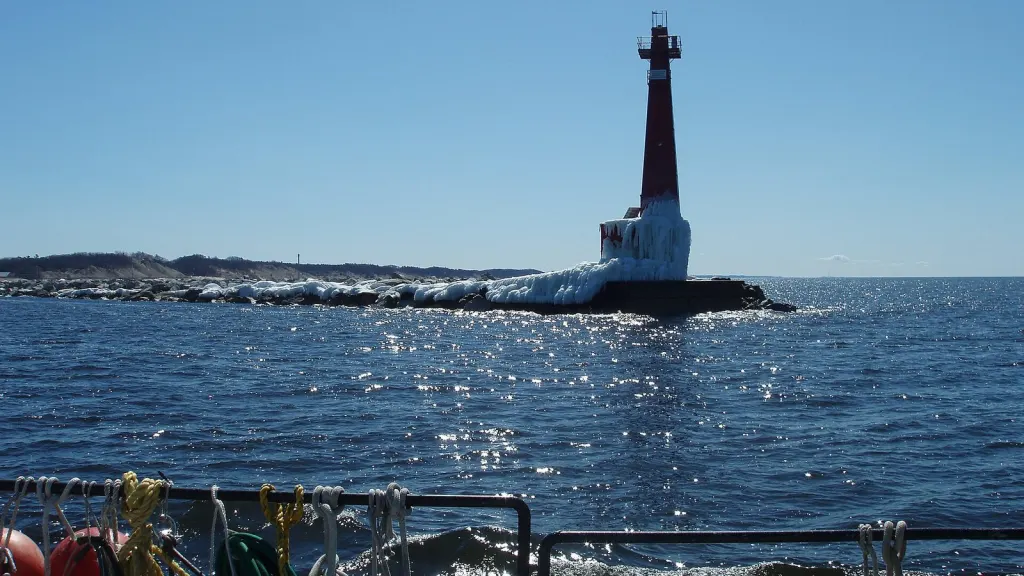
The Muskegon operation began on short notice, after the Department of Natural Resources heard that anglers were catching ripe whitefish off the breakwall where Muskegon Lake meets Lake Michigan, a sign the fish had moved near shore to spawn. More than a dozen people rushed to the scene.
“It’s all hands-on-deck right now,” said Patrick Hanchin, who manages the state’s Charlevoix Fisheries Research Station.
Forty pairs, one at a time
Working from a small boat in the Muskegon Channel, crews set gillnets for short stretches to limit stress on the fish, and sometimes used electrofishing to stun them briefly instead. They netted 40 fertile males and females, believed to be about 20 years old.
DNR hatchery biologist Matt Hughes dried each female with a towel, pressed out thousands of eggs, added a few drops of sperm and mixed them with a feather before adding hatchery water to trigger fertilization. The eggs soaked in an iodine-based disinfectant for 30 minutes. The process was repeated 40 times, each set kept separate. “I’ve never gotten to raise whitefish,” Hughes said. “So it’s a new challenge, for a good cause that I’m excited about.”
The parent fish die in the process and are sent to Michigan State University for health testing. Late that night, Hughes drove the eggs to the Wolf Lake Fish Hatchery, where they will sit in cold-water incubators for several weeks. Once their eyes are visible through the shells, they will move to the Jordan River National Fish Hatchery in Elmira.
Tribes lead on experience
The state has little experience raising whitefish; its hatcheries focus on game fish such as salmon and walleye. Officials turned to tribes, including the Little Traverse Bay Bands of Odawa Indians and the Sault Ste. Marie Tribe of Chippewa Indians, which have run experimental hatchery programs for years. The Little Traverse Bay Bands are also rescuing fish from northern Lake Michigan.
Current funding covers only a couple of years of hatchery costs. Leaders hope to recruit neighboring states and the U.S. and Canadian governments to keep the fish in captivity, possibly for decades, until the mussel invasion can be controlled. More outdoors news is in Outdoors and West Michigan.