Photo: Holly Cheng / Wikimedia Commons, CC BY-SA 4.0
Before the Thanksgiving turkey goes in the oven, the Michigan Department of Agriculture and Rural Development wants cooks to plan for food safety, from refrigerator space to leftovers. The department shared its holiday guidance on Nov. 24, drawing on U.S. Department of Agriculture recommendations.
Get the fridge ready
Preparing in advance helps keep food safe before cooking begins, MDARD said. Its checklist:
- Keep the refrigerator at 40°F and the freezer at 0°F.
- Throw out outdated foods to make room for holiday ingredients and leftovers.
- Clean refrigerator shelves and drawers with hot, soapy water and let them air dry.
Three safe ways to thaw a turkey
In the refrigerator. Thaw the turkey in its original store wrapper on a rimmed pan or tray on a lower shelf, so juices don’t drip onto other foods. Allow about 24 hours for every four to five pounds. A 16-pound turkey takes about four days to thaw completely. Cook a refrigerator-thawed turkey within a few days.
In cold water. Submerge the turkey in cold tap water, sealed in its unopened wrapper or a sealed plastic bag. Change the water every 30 minutes to keep it cold, and allow 30 minutes per pound. Don’t use warm or hot water, which pushes the outer layers into the “danger zone” above 40°F, where bacteria grow quickly. Cook the turkey immediately after it thaws.
In the microwave. Remove the plastic wrap and any foam tray. Follow the microwave maker’s defrost-by-weight times per pound, flipping as directed, and cook the turkey immediately afterward.
Never thaw a turkey on the countertop, MDARD said, and don’t leave food at room temperature for long periods, which lets harmful bacteria multiply rapidly.
While you cook
To prevent cross-contamination, wash hands, cutting boards, utensils and countertops thoroughly after handling raw poultry, and use separate utensils and prep areas for raw and ready-to-eat foods when possible.
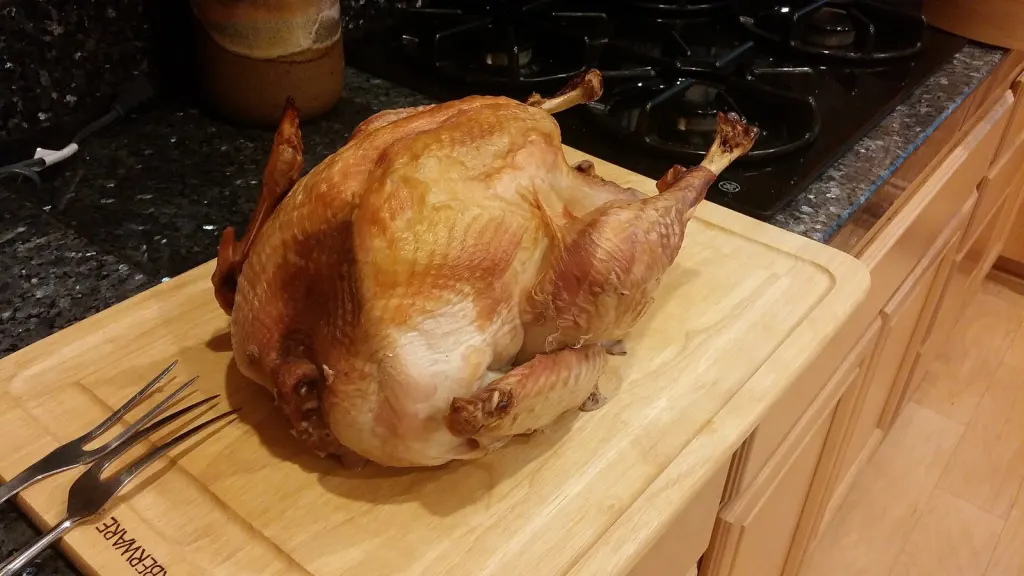
Use a food thermometer to make sure the turkey reaches an internal temperature of 165°F, checking the thickest parts of the breast and thigh. The USDA’s Safe Minimum Internal Temperature Chart lists targets for other meats.
Leftovers
- Refrigerate leftovers within two hours of cooking, using shallow containers so food cools quickly.
- Eat refrigerated leftovers within three to four days, and reheat them to 165°F.
- For longer storage, freeze leftovers and use them within three to four months. Leftovers can lose moisture and flavor when frozen longer.
Who pays for food safety education
MDARD’s consumer guidance is backed by its Food Safety Education Fund, which is paid for by assessments of $3 to $5 on Michigan food establishment license fees. In October the department awarded more than $320,000 in grants to seven organizations, and it has awarded nearly $2.5 million through the program since fiscal year 2019.
Planning the timeline
The thawing math is the step most likely to catch cooks off guard. Using MDARD’s refrigerator rule, a 20-pound bird needs four to five days in the fridge, so a turkey that is still frozen on Thanksgiving eve will need the cold-water method: about 10 hours for that 20-pound bird, with the water changed every half hour.
More food safety information is on Michigan’s food safety web page and the USDA’s food safety website. For more holiday planning, see Lifestyle, our Thanksgiving weather forecast and where families can find Thanksgiving meal help.